Welcome to the home of the USYD Meta Lab! We research all things metacognition at the University of Sydney. Below you can learn more about who we are, what we research, and how we do it.
Our research investigates how individuals monitor and regulate their thoughts and emotions. By
employing a blend of experimental methods and individual differences approaches, we explore the
mechanisms by which people understand, evaluate, and adaptively modify their internal cognitive
and emotional experiences.
At the core of our work is an examination of the fundamental processes underlying metacognition,
with a particular emphasis on translating these insights into practical applications within
educational and learning contexts. Our interdisciplinary approach bridges cognitive,
educational, and affective psychology, drawing from these diverse domains to develop innovative
theoretical frameworks of metacognition as well as novel interventions to improve educational
outcomes.
By integrating perspectives across psychological disciplines, we aim to provide a comprehensive understanding of how individuals can more effectively monitor their mental processes, ultimately enhancing learning, emotional outcomes, and thinking.
Studying how providing self-report confidence ratings influences cognitive performance and individual differences in response patterns.
Examining emotional self-awareness, emotion-metacognition relationships, and metacognitive beliefs about feelings.
Investigating formation, change mechanisms, and discrepancies between perceived and objective abilities affecting behaviour.
Focusing on confidence-decision relationships, developing interventions to enhance decision-making quality and examining miscalibration consequences.
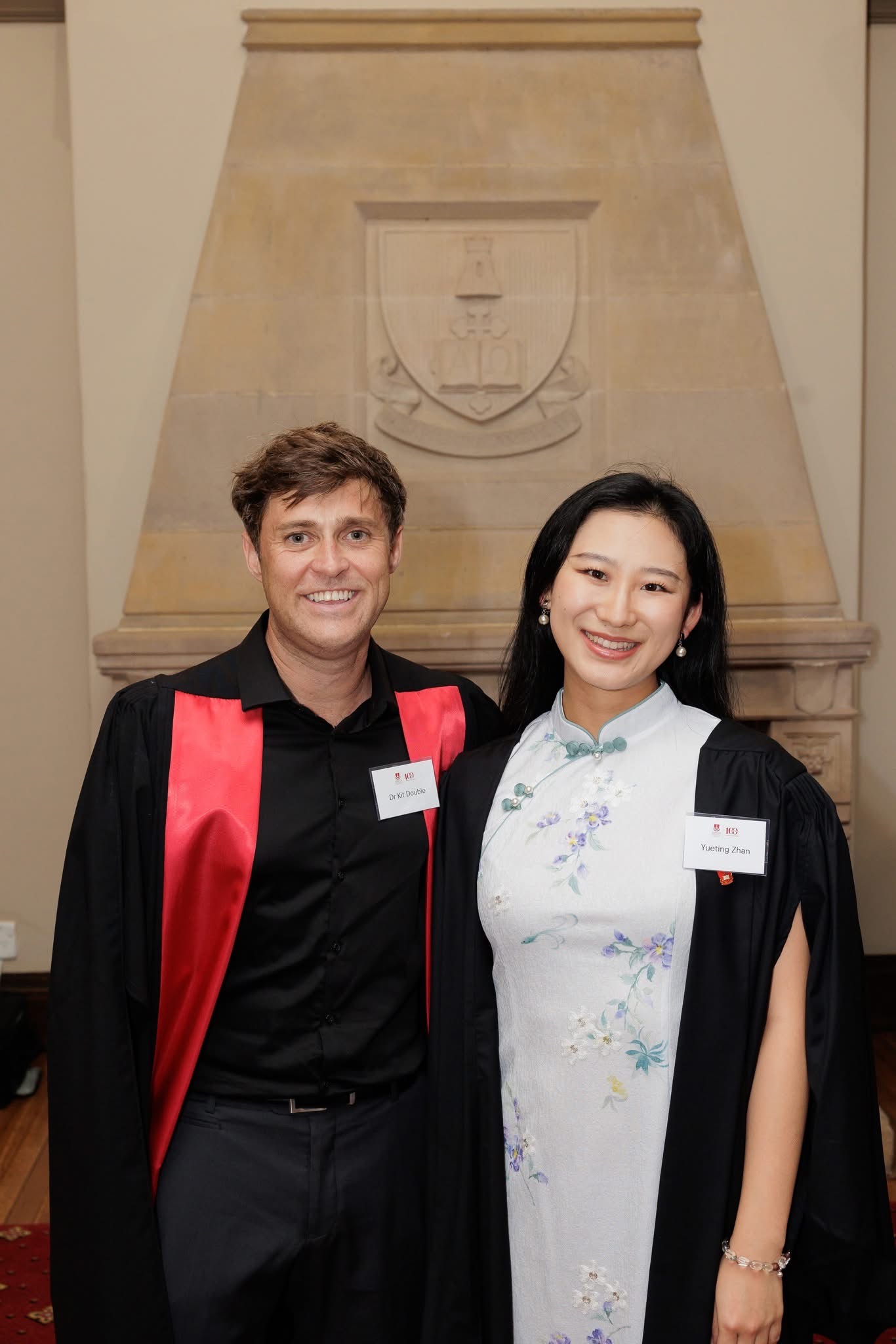
Yueting has passed her PhD viva, an outstanding achievement and a major milestone in her research career.
Kit discussed his research on self-awareness and metacognition on ABC Drive. The segment starts at 13:25, and links to the related confidence-rating methods paper.
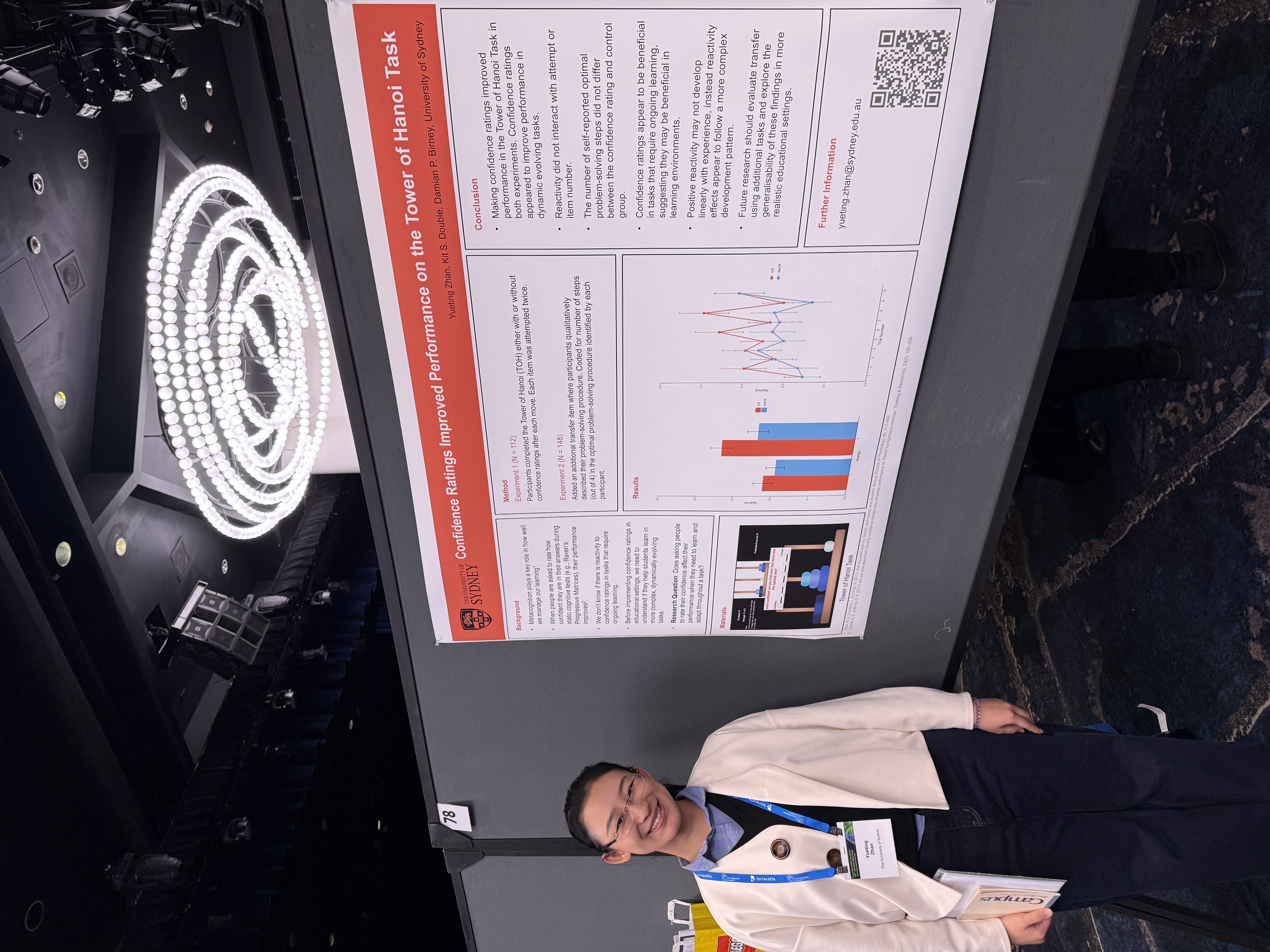
Kit presented work on reactivity in a category learning task, and Yueting presented her work examining reactivity in the Tower of Hanoi task.
According to an analysis published by The Australian Research Magazine, Kit received the most citations in top-20 psychology journals among Australian researchers over the past five years.
A jsPsych plugin for collecting confidence ratings in online experiments
Tools for analysis and reproducibility in metacognition research
Code for experimental emotional regulation paradigms
Platform to code and host online experiments
All lab repositories and open-source projects
Meta-analysis workshop presentation from Psychonomics 2024
We are always looking for talented PhD students to join the Meta Lab. If you are interested in metacognition research, we'd love to hear from you.
A brief description of your research interests, your CV, and academic transcripts.
We do not conduct qualitative or classroom-based educational research projects.